
Table of Contents
- What Is Paint Protection Film and Why Tesla Owners Need It
- Paint Protection Film Installation Cost: What to Expect
- How Long Does PPF Last on a Tesla
- Tesla Ceramic Coating vs PPF: Which Protection Is Right for You
- Tesla Paint Protection Maintenance Tips for Long-Term Results
- How to Book Your Tesla Paint Protection Service
- Why Professional Installation Matters: DIY vs. Professional Risks
- Frequently Asked Questions
Last Updated: September 20, 2026
What Is Paint Protection Film and Why Tesla Owners Need It
Paint protection film (PPF) is a transparent, self-healing polyurethane layer applied to your vehicle’s exterior surfaces to shield against damage from road hazards, UV rays, and environmental contaminants. Think of it as invisible armor for your Tesla’s factory paint. Once installed, PPF guards against rock chips, scratches, bird droppings, tree sap, and oxidation while maintaining your vehicle’s original finish and gloss.
Tesla owners face unique paint challenges. Tesla’s factory paint, while sleek, is thinner than traditional automotive finishes and more susceptible to damage from everyday driving. A single gravel impact on the highway can chip the clear coat, exposing bare paint underneath. Over time, these small damages compound. PPF solves this by absorbing impacts that would otherwise reach your paint surface. Complementing this exterior defense with automotive window tinting provides a comprehensive shield that preserves the cabin environment while maintaining the vehicle’s aesthetic integrity.
The film itself is nearly invisible once applied correctly. You get complete protection without altering your Tesla’s aesthetic. Many owners choose full-body coverage on high-impact areas like the hood, front fenders, bumper, and mirrors. Others opt for partial coverage focused on vulnerable zones. Either approach preserves your vehicle’s finish and maintains its resale value.
Paint Protection Film Installation Cost: What to Expect
When you’re ready to book paint protection service, cost depends on several factors: vehicle model, coverage area, film quality, and installation complexity. Full-body PPF typically costs more than partial coverage because it requires more material and labor time. A Tesla Model 3 with partial front-end coverage will cost less than a Model S with complete protection.
At Automobilia Auto Salon, we use XPEL paint protection film, a professional-grade material trusted by luxury vehicle owners across the region. XPEL offers superior clarity, self-healing properties, and long-term durability compared to budget alternatives. The investment reflects the quality of materials and expertise required for flawless installation.
Several variables affect your final quote. Vehicle color matters, darker finishes show dust and imperfections more easily, requiring more meticulous application. The condition of your current paint also factors in. If your Tesla needs paint correction before PPF application, that adds to the overall cost. Complex curves on certain Tesla models require more precision and time.
For an accurate pricing breakdown tailored to your specific Tesla model and coverage needs, we recommend requesting a free quote. This gives you transparency on materials, labor, and any additional services like ceramic coating or window tinting that complement your protection plan.
How Long Does PPF Last on a Tesla
High-quality paint protection film is a durable vehicle protection solution. XPEL film is engineered to maintain clarity and protective properties. The self-healing technology means minor scratches and swirl marks disappear with heat exposure, keeping your Tesla looking pristine.
The longevity of your PPF depends on maintenance and environmental exposure. Vehicles driven in harsh climates with intense UV exposure, salt air, or extreme temperature swings may see slightly reduced lifespan. Regular washing and proper maintenance extend film life significantly.
One misconception is that PPF yellows or becomes cloudy over time. Quality films like XPEL resist yellowing through advanced UV-blocking technology. Budget films from unknown manufacturers are more prone to discoloration, which is why professional-grade material matters. When you book paint protection service with experienced installers, you’re choosing film that stays clear.
Removal is straightforward when the time comes. Professional technicians safely peel away aged film without damaging underlying paint. Many owners simply reapply fresh PPF rather than remove it permanently, maintaining continuous protection throughout their vehicle ownership.
Tesla Ceramic Coating vs PPF: Which Protection Is Right for You
Ceramic coating and paint protection film serve different purposes, though both enhance your Tesla’s appearance and durability. Understanding the distinction helps you choose the right protection strategy, or combine both for maximum results.
Ceramic coating is a liquid polymer that bonds to your paint, creating a hard, hydrophobic surface. It repels water, reduces swirl marks from washing, and provides UV protection. Ceramic coating enhances gloss and makes your Tesla easier to clean. However, it doesn’t prevent physical damage from impacts or rock chips. Think of it as a protective sealant rather than armor.
Paint protection film is physical barrier material that absorbs impacts before they reach your paint. PPF prevents rock chips, scratches, and abrasions. It’s self-healing, meaning minor scratches disappear with heat. However, PPF doesn’t add the same level of shine or water-beading that ceramic coating provides.
The smart approach combines both. Apply PPF to high-impact areas, hood, front bumper, fenders, mirrors, where rock chips are most likely. Then apply ceramic coating over the entire vehicle, including PPF-protected areas. The ceramic coating enhances gloss, improves hydrophobic properties, and protects against chemical contaminants. PPF handles physical impacts while ceramic coating handles environmental protection and aesthetics.
This layered approach maximizes protection. Your Tesla stays protected from impacts, UV damage, water spots, and chemical damage. The combination also simplifies maintenance, as the hydrophobic ceramic coating makes washing easier.
Tesla Paint Protection Maintenance Tips for Long-Term Results
Once PPF is installed, proper maintenance ensures maximum longevity and appearance. The good news: PPF requires minimal upkeep compared to unprotected paint.
Washing and drying should follow standard practices. Use a pH-neutral car wash soap and soft microfiber wash mitts. Avoid abrasive sponges or harsh chemicals that can degrade the film’s protective properties. Dry with microfiber towels to prevent water spots. Wash your Tesla every two weeks in normal conditions, weekly if you drive in harsh environments.
Avoid aggressive detailing for the first week after installation. The film needs time to cure fully. During this period, skip automatic car washes and high-pressure sprays. After curing, normal washing is safe.
Protect from extreme heat when possible. While PPF is heat-resistant, prolonged exposure to temperatures above 140°F can affect the adhesive. Park in shade during hot months. Don’t apply heat guns or pressure washers directly on seams where film edges meet paint.
Address damage promptly. If you notice a tear or separation, contact your installer immediately. Small issues are easy to repair. Ignored damage can allow moisture under the film, compromising protection.
Combine with ceramic coating maintenance. If you’ve applied ceramic coating over PPF, maintain the coating with regular washing and occasional ceramic maintenance products. This keeps your protection system performing optimally.
Regular inspections catch problems early. Every few months, examine your PPF under good lighting. Look for peeling edges, bubbles, or clouding. Professional-grade film rarely develops issues, but catching problems quickly prevents expensive repairs.
How to Book Your Tesla Paint Protection Service
Booking your Tesla paint protection service with Automobilia Auto Salon is straightforward. We’ve simplified the process to accommodate busy vehicle owners who need reliable protection without disrupting their schedules.
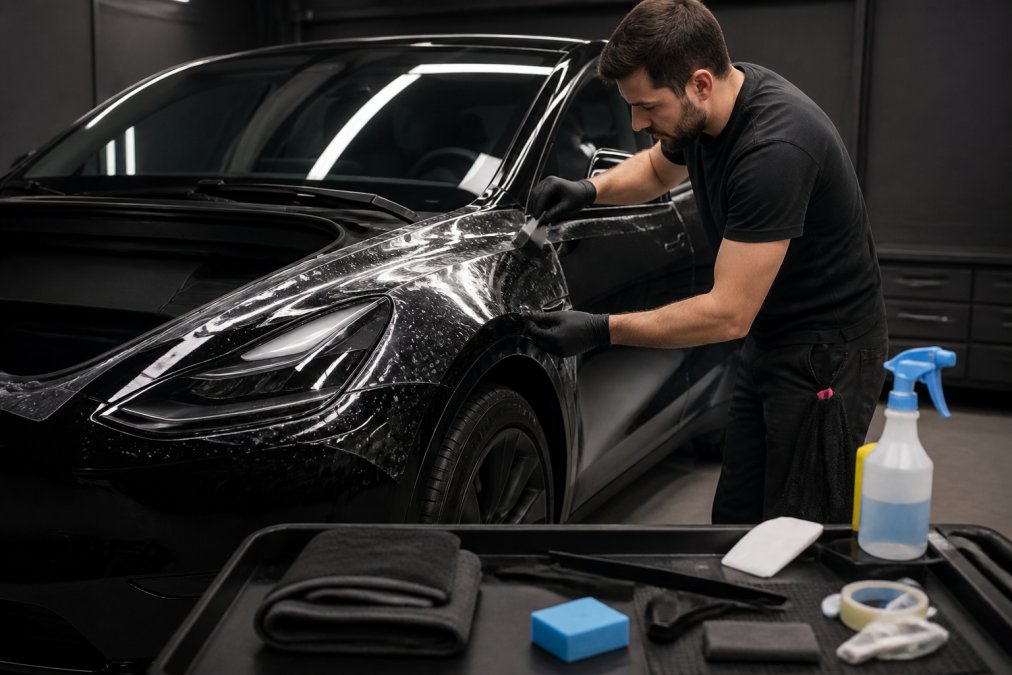
Technician applying clear film to a Tesla fender as you book paint protection service
Professional technician applying clear protective film to a Tesla’s hood and front fender in a modern auto salon bay, with precision tools and application materials visible on the workbench
Start with a free consultation. Contact Automobilia Auto Salon to discuss your Tesla model, desired coverage area, and protection goals. Our team evaluates your vehicle’s current condition and recommends the best PPF solution. This consultation is obligation-free and helps you understand exactly what to expect.
Schedule your appointment. We offer flexible scheduling to fit your calendar. Most full-body PPF installations take 3-5 days depending on complexity. During this time, we provide a 2025 Tesla courtesy car so you’re never without transportation. This amenity sets us apart, you maintain your daily routine while your vehicle receives expert protection.
Prepare your vehicle. Before arrival, wash your Tesla thoroughly. We perform additional surface preparation and paint correction if needed, but starting with a clean vehicle accelerates the process. If your paint has existing damage or swirl marks, mention this during booking so we can address it.
Installation day. Our technicians apply PPF with precision, ensuring seamless edges and bubble-free coverage. We work methodically to guarantee flawless results. The process involves careful surface preparation, precise film cutting, and meticulous application. You can pick up your vehicle once curing is complete, typically within the quoted timeframe.
Aftercare guidance. We provide detailed maintenance instructions and warranty documentation. Our team explains how to care for your PPF and ceramic coating to maximize longevity. We’re available for questions or touch-ups throughout your ownership.
To book paint protection service, request a free quote through our website or call directly. Mention your Tesla model and desired coverage area.
Why Professional Installation Matters: DIY vs. Professional Risks
The temptation to apply PPF yourself is understandable, it appears straightforward. However, DIY paint protection film installation carries significant risks that professional installation eliminates.
Frequently Asked Questions
How much does it cost to book a Tesla paint protection service?
Paint protection film installation cost depends on your Tesla model, coverage area (partial or full-body), and the specific film grade you choose. Full-body coverage typically costs more than partial protection on high-impact areas. Contact Automobilia Auto Salon for a free quote tailored to your vehicle and protection needs.
How long does PPF last on a Tesla?
High-quality XPEL paint protection film is durable when properly maintained. It carries a 10year manufacturers warranty, we match that with our 10 year workmanship warranty. The self-healing properties of premium film help it resist minor scratches and swirl marks. Longevity depends on climate, driving conditions, and how well you follow maintenance guidelines. Professional installation ensures maximum durability.
Is Tesla ceramic coating or PPF better for paint protection?
PPF offers superior physical protection against rock chips, impacts, and chemical damage, while ceramic coating provides UV protection and a hydrophobic gloss finish. Many Tesla owners choose both: PPF on high-impact areas (hood, fenders, bumper) and ceramic coating over the entire vehicle for enhanced aesthetics and protection. Your choice depends on your priorities and budget.
What should I do to maintain my Tesla’s paint protection after installation?
Wash your vehicle regularly with pH-neutral soap to remove contaminants. Avoid abrasive scrubbing—use a soft microfiber cloth. Apply a hydrophobic sealant every 6-12 months to maintain the gloss finish and water-beading properties. Park in shade when possible to protect against UV damage. Avoid parking under trees where sap and bird droppings can damage the paint surface.