
Table of Contents
- Why Professional Window Tinting Matters for Vehicle Protection
- UV Ray Protection and Long-Term Interior Preservation
- Heat Rejection and Interior Comfort Benefits
- Glare Reduction and Driving Safety
- Privacy, Security, and Shatter Resistance
- Ceramic Window Tint Benefits vs. Standard Film
- Professional vs. DIY Window Tinting: Why Installation Quality Matters
- How Long Does Window Tinting Take and What to Expect
- Frequently Asked Questions
Last Updated: October 2, 2026
Why Professional Window Tinting Matters for Vehicle Protection
Professional window tinting is one of the most effective upgrades you can make to protect your vehicle’s interior and enhance your driving experience. Unlike DIY applications that often result in bubbles, peeling, and poor optical clarity, professional window tinting combines precision installation with high-quality materials designed to deliver lasting performance. At Automobilia Auto Salon, we’ve spent over 25 years perfecting the craft of window tinting.
The benefits of professional window tinting service extend far beyond aesthetics. You’re investing in UV protection that preserves your interior, heat rejection that keeps your cabin cooler, and glare reduction that improves safety during long drives. Whether you own a luxury sedan, a high-performance sports car, or a Tesla, window tinting addresses real problems that affect your vehicle’s value and your comfort on the road.
UV Ray Protection and Long-Term Interior Preservation
Ultraviolet (UV) rays are one of the most damaging forces acting on your vehicle’s interior. Over time, UV exposure causes dashboard cracking, leather fading, and upholstery discoloration. Professional window tinting blocks up to 99% of harmful UV rays, creating a protective barrier that preserves your interior for years to come.
The difference becomes visible within months. Dashboards that would normally fade to a chalky gray retain their original color. Leather seats stay supple instead of becoming brittle and cracked. This protection is especially critical for luxury vehicles, where interior condition directly impacts resale value.
Professional tinting films are engineered specifically for UV rejection. Ceramic window tint, in particular, offers superior UV protection compared to standard dyed films because the ceramic particles block heat and UV simultaneously without the signal-blocking properties of metallic films. This means your phone signal, GPS, and radio reception remain unaffected while your interior stays protected.
Heat Rejection and Interior Comfort Benefits
Window tinting dramatically reduces the amount of solar heat that enters your vehicle. On a hot summer day, an untinted car can reach interior temperatures of 160°F or higher. Professional window tinting can significantly reduce that, depending on the film grade you choose. This translates to a more comfortable driving experience, lower air conditioning strain, and reduced fuel consumption.
The heat rejection benefit compounds over time. Your air conditioning system doesn’t have to work as hard to maintain a comfortable temperature, which means less engine load and better fuel efficiency. For drivers who spend hours in their vehicle during summer months, this comfort improvement is substantial. You’re not just staying cooler, you’re reducing wear on your vehicle’s climate control system.
Ceramic window tint films excel at heat rejection because they use non-conductive ceramic particles that absorb and dissipate infrared (IR) energy rather than reflecting it back through the glass. This approach provides superior thermal performance compared to metallic or dyed films, which rely on reflection alone. The result is a cabin that stays noticeably cooler without the harsh reflective appearance that metallic films can create.
Glare Reduction and Driving Safety
Glare is more than just an annoyance; it’s a genuine safety hazard that impairs vision and increases driver fatigue. Intense sunlight reflecting off the road, water, or surrounding vehicles can cause temporary vision impairment and eye strain, particularly during early morning and late afternoon driving when the sun sits low on the horizon. Professional window tinting reduces glare by filtering incoming light, which improves visibility, reduces eye strain, and helps you see dashboard instruments more clearly, making it easier to monitor speed and fuel levels at a glance. Many drivers report feeling noticeably less fatigued on highway drives after installing professional window tint.
The effectiveness of glare reduction depends on the film’s Visible Light Transmission (VLT) rating, a measurement that indicates what percentage of visible light passes through the tinted window. A VLT of 70% means 70% of visible light enters the cabin; a VLT of 35% means only 35% of light passes through, creating a much darker appearance and stronger glare reduction. Lower VLT percentages block more light and reduce more glare, but they also darken your windows more significantly.
Choosing the right VLT level requires balancing three factors: glare reduction, visibility, and legal compliance. Most drivers find that a VLT between 50-70% provides meaningful glare reduction without compromising visibility or creating an overly dark appearance. However, legal limits vary significantly by region and by window location (front side windows, rear side windows, and rear windshield often have different allowable VLT levels).
Front Side Window Regulations (driver and front passenger windows) are the most restrictive. Most states require a minimum VLT for front side windows. This legal limit is designed to ensure law enforcement can see into the vehicle during traffic stops and to maintain driver visibility.
Rear Side and Rear Windshield Regulations are typically more permissive. Rear side and rear windshield regulations are typically more permissive, giving you more flexibility to achieve stronger glare reduction and privacy in the back of your vehicle.
Before selecting a tint level, professional installers will review your state’s specific VLT requirements and help you choose a compliant film grade that maximizes glare reduction within legal boundaries. This guidance is critical: installing tint that exceeds legal limits can result in fines, mandatory removal, or vehicle inspection failures. Professional installers maintain current knowledge of regional regulations and ensure your installation meets all legal requirements while delivering the safety and comfort benefits you’re seeking.
Privacy, Security, and Shatter Resistance
Professional window tinting provides a layer of privacy that deters theft and protects your belongings. Potential thieves can’t see valuable items inside your vehicle, which significantly reduces the likelihood of break-ins. Beyond privacy, quality window film adds shatter resistance, if your window breaks due to impact or accident, the film holds the glass together instead of scattering dangerous shards throughout the cabin.
This shatter resistance is a genuine safety feature. In a collision or sudden impact, tinted window film keeps glass fragments contained, protecting occupants from lacerations and reducing the risk of ejection through windows. It’s a layer of protection that many drivers overlook until they need it.
The security benefit extends to your vehicle’s contents. High-end audio systems, laptops, phones, and other valuables are hidden from view when you have professional window tinting. Combined with other security measures, tinting makes your vehicle a less attractive target for opportunistic theft.
Ceramic Window Tint Benefits vs. Standard Film
Not all window films are created equal. Understanding the technical differences between dyed, carbon, and ceramic films is essential to making an informed decision about which professional tinting service will deliver the best long-term value.
Dyed Window Film is the most affordable option. Dyed films work by absorbing solar heat through a layer of organic dye molecules embedded in the film. While they provide some UV protection and heat rejection, dyed films have a significant weakness: the dye degrades over time when exposed to UV rays. Within 2-3 years, dyed films typically begin to fade, turning purple or losing their dark appearance. This fading is irreversible and signals that the film’s protective properties are diminishing.
Metallic Window Film uses tiny metallic particles (aluminum or other metals) to reflect solar heat away from the vehicle. Metallic films excel at heat rejection and are more durable than dyed films. However, they come with a critical trade-off: the metallic particles can interfere with radio signals, cell phone reception, and GPS navigation. Metallic films also create a reflective appearance that some owners find aesthetically unappealing.
Ceramic Window Film represents the pinnacle of tinting technology.
Professional vs. DIY Window Tinting: Why Installation Quality Matters
The difference between professional and DIY window tinting is night and day. Professional installation requires specialized tools, precise cutting templates, and years of experience to execute properly. DIY attempts often result in bubbles, wrinkles, peeling edges, and poor adhesion, problems that become visible within weeks or months.
How Long Does Window Tinting Take and What to Expect
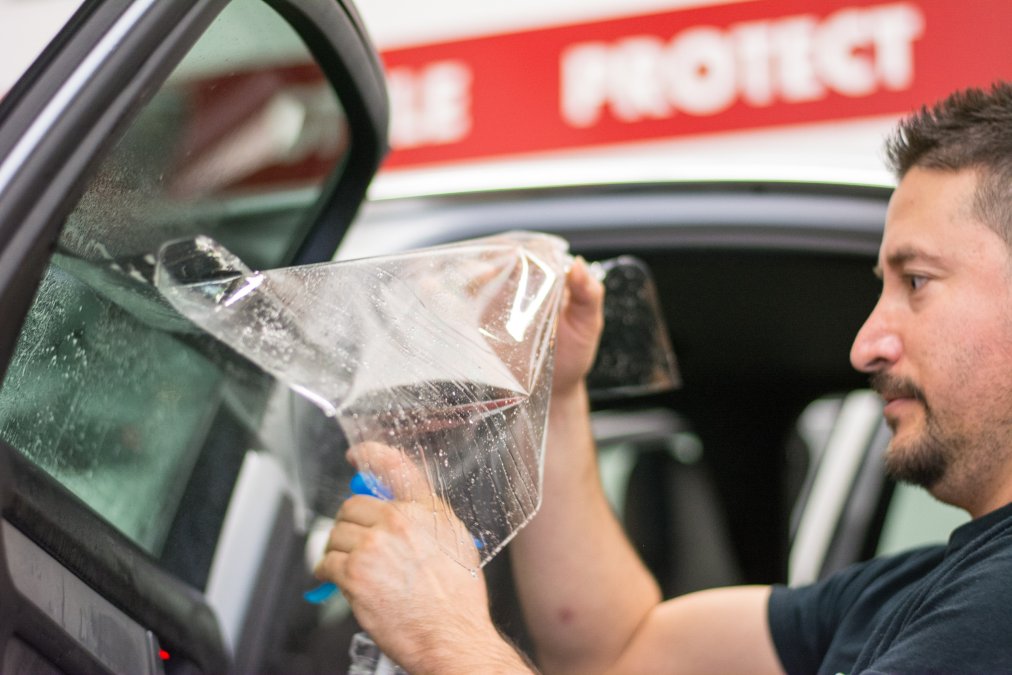
The timeline for professional window tinting depends on your vehicle and the complexity of the installation. Most passenger vehicles require a few hours for complete tinting, while larger vehicles like SUVs or trucks may take longer. The process involves careful surface preparation, precise film application, and proper curing time.
During installation, our team will:
- Clean and prepare all window surfaces to remove contaminants
- Cut the ceramic film to exact specifications for each window
- Apply the film with precision to ensure perfect adhesion
- Inspect for bubbles, wrinkles, or imperfections
- Allow proper curing time before you use the windows
Frequently Asked Questions
Is professional window tinting worth the investment?
Professional window tinting delivers measurable benefits that DIY kits cannot match. UV protection prevents interior fading and cracking, heat rejection improves comfort and reduces air conditioning strain, and glare reduction enhances driving safety. Quality ceramic films maintain optical clarity while blocking infrared radiation, and professional installation ensures bubbling, peeling, and adhesive failure won’t occur. The durability and warranty coverage make it a smart long-term investment for vehicle protection.
How does professional-grade ceramic tint differ from standard dyed film?
Ceramic window tint uses advanced nano-ceramic particles that reject heat and infrared without the fade-prone dyes found in standard films. Ceramic tint maintains superior optical clarity, blocks more solar heat gain, and resists degradation over time. Standard dyed film absorbs solar energy and can deteriorate, while ceramic films preserve their performance for longer. Professional installers use ceramic-grade materials with proper surface preparation and precision cutting, ensuring superior results compared to consumer-grade alternatives.
What should I know about automotive window tinting laws in my state?
Window tint darkness is regulated by Visible Light Transmission (VLT) laws that vary by state. Front windshields typically must allow most light through, while side windows and rear windows have specific VLT requirements that vary by state. Violating tint laws can result in fines and mandatory removal. Professional installers stay current on state-specific legal compliance requirements and can recommend tint grades that meet regulations while maximizing your privacy and heat rejection benefits. Always verify your state’s current tint laws before installation.
How long does professional window tinting take to complete?
Professional window tinting typically takes a few hours depending on your vehicle type and the number of windows being tinted. Luxury vehicles with complex window shapes may require additional time for precision cutting and careful installation. After installation, the adhesive requires a curing period before you should roll down windows or expose the film to moisture. Professional installers handle all surface preparation, precise application, and quality checks to prevent bubbling, peeling, and other adhesive failures that compromise the film’s performance.