
Table of Contents
- What Ceramic Coating Does for a Luxury Car
- Ceramic Coating vs. Traditional Wax and Sealant
- Paint Protection Film vs. Ceramic Coating
- Ceramic Coating Cost for Luxury Cars
- How Long Does Ceramic Coating Last?
- Ceramic Coating Maintenance Tips for Long-Term Protection
- Interior Ceramic Protection and Resale Value
- Conclusion
- Frequently Asked Questions
Last Updated: September 13, 2026
What Ceramic Coating Does for a Luxury Car
Ceramic coating for luxury cars is a liquid polymer that chemically bonds with the clear coat, creating a semi-permanent layer that repels water, blocks UV rays, and resists contaminants.
The coating fills microscopic pores in your clear coat, so water beads and rolls off instead of etching. Owners also notice the depth of shine, a wet, reflective finish wax can mimic for weeks but never sustain.
How the Coating Bonds to Your Paint
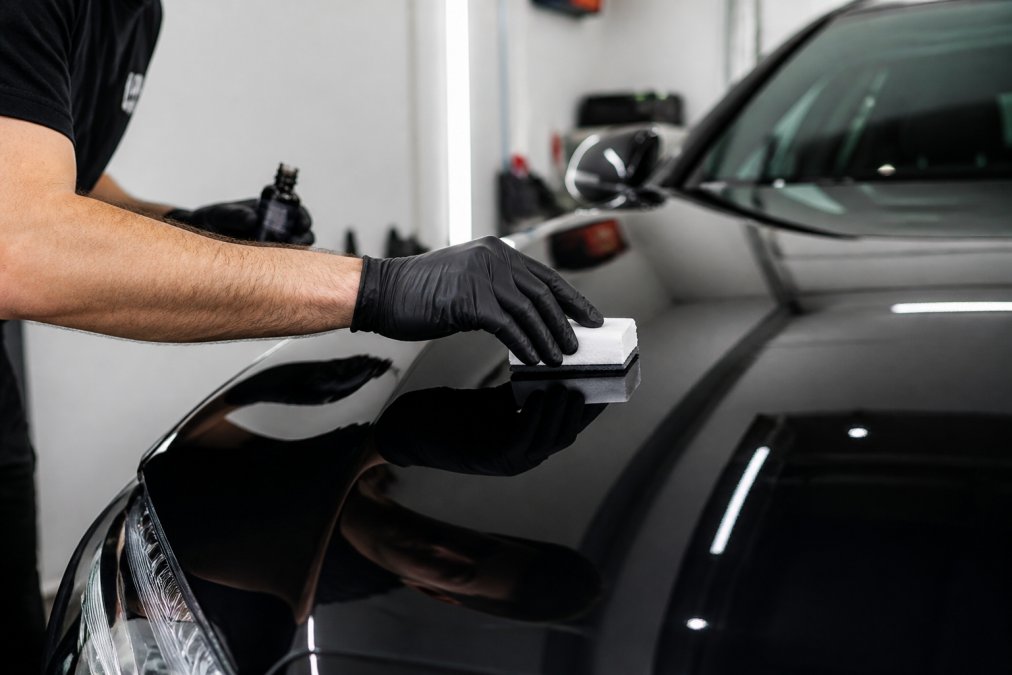
A ceramic coating isn’t a cover you peel off later. It’s a chemical polymer, typically silicon dioxide or a nano-ceramic formula, that cross-links with the clear coat during curing. Surface preparation decides whether that bond holds, any oil, old sealant, or embedded contaminant becomes a weak point where the coating lifts early.
That’s why professional-grade application starts with a decontamination wash, clay treatment, and often paint correction to remove swirl marks and oxidation before any coating touches the car.
Why Luxury Paint Needs Different Treatment
Many high-end vehicles use softer clear coats or multi-stage paint systems that show swirl marks far more readily than mass-market finishes. A coating adds a harder sacrificial layer, so the wash mitt meets the coating instead of the clear coat.
The coating protects the clear coat, but it doesn’t make your car scratch-proof. Most swirl marks on coated cars come from improper washing, not from the coating failing. Two-bucket washes and clean microfiber are still mandatory.
Ceramic Coating vs. Traditional Wax and Sealant
Ceramic coating outlasts wax and sealant by a wide margin and offers stronger chemical resistance, but each option has a place. Wax washes away within weeks; a polymer sealant lasts a few months with better UV resistance.
Ceramic coatings bond to the surface and hold for years, which is why luxury owners gravitate toward them. The trade-off is cost and process: proper prep and a curing window where the car stays dry.
| Option | Typical Longevity | UV & Chemical Resistance | Best For |
|---|---|---|---|
| Carnauba wax | Weeks | Low | Show cars, frequent reapplication |
| Polymer sealant | Months | Moderate | Budget-conscious daily drivers |
| Ceramic coating | Years | High | Long-term protection, luxury finishes |
| Paint protection film | 5-10 years | Highest (physical) | High-impact zones, rock chips |
Paint Protection Film vs. Ceramic Coating
Paint protection film and ceramic coating solve two different problems, and the smartest luxury owners use both. PPF is a thick urethane film that absorbs rock chips, road debris, and light scratches; ceramic coating is a thin chemical layer that repels water, contaminants, and UV while adding gloss.
If your concern is stone chips on the front bumper and hood, film is the answer. If it’s chemical etching from bird droppings, acid rain, and brake dust, coating handles it. Many owners film high-impact zones first, then coat the whole car over the top.
Ceramic Coating Cost for Luxury Cars
Ceramic coating pricing in the U.S. is driven less by the product than by the labor around it. The coating itself is often a few hundred dollars of material; paint correction, decontamination, and application time move a quote into five figures. For a luxury vehicle, pricing depends on the specific services and vehicle condition.
| Service Level | Typical Price Range | What’s Included |
|---|---|---|
| Entry coating, no correction | $600 – $1,200 | Decon wash, clay, 1-2 year coating |
| Mid-tier coating + 1-step polish | $1,200 – $2,500 | Iron/tar decon, single-stage polish, 3-5 year coating |
| Premium coating + multi-stage correction | $2,500 – $5,000+ | Full decon, 2-3 stage correction, 5-10 year coating |
| Full-vehicle PPF + coating on top | $6,000 – $10,000+ | Film on all painted panels, coating over film and glass |
| Interior ceramic add-on | $300 – $800 | Leather, fabric, and trim protection |
What Actually Drives the Price
Paint correction hours. The largest line item. A well-kept car may need several hours of polishing; a swirled, oxidized, or previously machine-buffed car can need significantly more time.
Coating tier and warranty length. A 2-year coating and a 9-year coating are not the same product. Higher tiers carry higher solids content, longer warranties, and often require brand certification, which limits who can sell them and raises the floor price.
Vehicle size and panel complexity. More surface area means more product, more polishing time, and more film if PPF is involved. A two-door coupe and a three-row SUV are not comparable jobs.
Whether film is added. Paint protection film is priced per panel or per full front, separate from the coating.
Shop reputation and location. Authorized installers in major metro markets charge more than shops in smaller markets, and the warranty is only as good as the shop backing it.
Why the Cheapest Quote Is Usually the Most Expensive
A low-cost “ceramic coating” special often does not include meaningful paint correction and may use a consumer-grade product. This can lead to short-lived results and potentially lock in existing paint imperfections.
Ask any shop for three things before you book: the exact coating product and its rated durability, the number of correction stages included, and the warranty terms in writing. A shop that cannot answer all three is not a shop you want touching a luxury finish.
The Resale-Value Case
For a luxury vehicle, the coating is a preservation play. Appraisers and trade-in buyers often consider paint and interior condition as indicators of overall vehicle maintenance. A car with intact, glossy, unetched paint and a clean, unfaded interior can present better at appraisal and potentially sell faster than one with oxidized clear coat and worn leather. A coating can help protect the value the car already has by preserving its appearance.
Warranty and Insurance Considerations
Two warranty questions come up constantly and rarely get answered clearly:
- Factory paint warranty. A properly applied ceramic coating does not void a factory paint or corrosion warranty (the FTC). The Magnuson-Moss Warranty Act prevents a manufacturer from voiding a warranty simply because an aftermarket product was applied, unless it can show the product caused the failure. Coatings are widely considered non-invasive.
- Insurance claims. If a coated panel is damaged in an accident, the coating is generally treated as a covered improvement, similar to aftermarket film or a wrap, provided it was disclosed to the insurer and the policy reflects it. Document the application with receipts and photos.
- Coating warranty itself. Most professional coating warranties cover the coating’s performance, not the paint underneath. They typically require annual inspections, documented maintenance, and sometimes a paid maintenance wash at the installer. Read the terms before you buy, a “lifetime” warranty with conditions you cannot meet is worth nothing.
Magnuson-Moss Warranty Act overview
How Long Does Ceramic Coating Last?
A professionally applied ceramic coating typically lasts several years on a daily-driven luxury vehicle, and premium tiers can carry extended warranties. The number on the bottle is not the number you get. Longevity comes down to three variables: solids content, prep quality underneath, and maintenance afterward.
What Actually Determines Longevity
Solids content and SiO2 percentage. Consumer sprays often contain 5-15% silicon dioxide and behave more like a durable sealant. Professional-grade coatings sold to certified installers typically run 50-90% solids and cross-link into a much harder film. Higher solids isn’t automatically better, it cures faster and is less forgiving, but it’s the biggest predictor of how many years you get.
Prep quality. A coating bonds to whatever is underneath it. If the shop skips full decontamination (iron remover, tar remover, clay) or leaves polishing oils on the panel, the coating adheres to the oil and lifts within months, which is why two shops can quote the same coating and deliver wildly different results.
Maintenance. A coated car washed with pH-neutral soap, dried with clean microfiber, and topped with a coating-safe product every few months holds its hydrophobic behavior far longer than one run through a brush tunnel. Automatic washes with spinning brushes abrade the top layer and strip the beading within a season.
Coating Tiers and Realistic Timelines
| Tier | Typical SiO2 Content | Realistic Durability | Warranty Range |
|---|---|---|---|
| Consumer spray/wipe-on | 5-15% | 3-6 months | None |
| Entry professional coating | 30-50% | 1-2 years | 1-3 years |
| Mid-tier professional | 60-80% | 3-5 years | 3-5 years |
| Premium professional | 80-90%+ | 5-7+ years | 5-10 years |
Curing Time and the First Week
Curing is not the same as drying. Most professional coatings flash (become touch-dry) within minutes to an hour, but full cross-linking takes 24 to 48 hours in a dust-free, temperature-controlled environment, and some formulations cure for up to seven days. During that window:
- No water contact for at least 24 hours, ideally 48 (Superhydrophobic ceramic coating)
- No washing for 7 days
- No parking under trees, near sprinklers, or in industrial fallout zones
- No wax, sealant, or topper for at least 7 days
Skipping the cure window is the most common reason a coating underperforms its warranty. The layer is still soft, and contaminants that land on it can bond permanently.
If a shop hands you the keys and says “you can wash it tomorrow,” ask what coating they used and what its cure schedule is. A legitimate professional-grade coating has a documented cure window, and a shop that ignores it is a shop that will also cut corners on prep.
How to Tell When a Coating Is Failing
A coating degrades from the top down, and the first sign is reduced water beading, the surface starts sheeting or holding droplets instead of shedding tight beads. Next comes loss of slickness, then water spotting that no longer wipes away, then dulling gloss. When beading drops off but the paint still looks good, a decontamination wash and coating-safe topper can restore performance for another season. When water spots etch into the surface, the coating is done and the panel needs polishing before reapplication.
Ceramic Coating Maintenance Tips for Long-Term Protection
Ceramic coating maintenance tips come down to three habits: wash correctly, wash often enough, and avoid anything abrasive. A coated surface stays slick only if you keep contaminants from bonding to it.
- Wash every two to four weeks with pH-neutral soap and two buckets
- Use a dedicated maintenance wash to refresh the hydrophobic layer
- Remove bird droppings and bug splatter promptly, before they etch
- Skip automatic car washes with spinning brushes
- Apply a coating-safe topper or sealant every few months
- Park in shade or a garage when possible to reduce UV load
A maintenance wash is the single most overlooked step. It removes the mineral buildup and light contamination that gradually dulls the beading, and it takes less time than a full decontamination. For owners who want the work handled correctly, our team offers exquisite detailing and hand car washes built around coated finishes.
Interior Ceramic Protection and Resale Value
Ceramic protection isn’t only for exterior paint. Interior ceramic coatings treat leather, fabric, and trim so spills bead up instead of soaking in, and UV-blocking coatings slow the fading and cracking that age a cabin.
Resale value can be influenced by vehicle condition. A luxury vehicle with intact, glossy paint and a clean, unfaded interior can present better to potential buyers. A coating that helps prevent oxidation, water spots, and etched clear coat can help keep the finish closer to showroom condition over years of ownership.
Conclusion
Protecting a luxury vehicle’s finish is a long-term commitment, and the wrong product or a rushed application costs you years of protection. Automobilia Auto Salon has served vehicle protection for 24 years, offering professional-grade ceramic coatings, XPEL paint protection film, and window tinting, backed by amenities like 2025 Tesla courtesy cars so your schedule never gets disrupted. Get a free quote and protect the asset you’ve invested in.
Frequently Asked Questions
Is there a downside to ceramic coating a car?
Yes, a few. Ceramic coating does not stop rock chips or deep scratches, so it is not a substitute for paint protection film. It also requires proper surface preparation and paint correction first, and it needs periodic maintenance washes to keep performing. If you skip those steps, you will not get the hydrophobic beading or gloss you paid for. For luxury cars, the main downside is upfront cost, but the long-term protection and easier cleaning often offset it.
What is the average cost to ceramic coat a car?
Pricing depends on the size of the vehicle, the condition of the paint, and the coating package you choose. Luxury vehicles often need more paint correction before coating, which adds to the total. Because every job is different, we recommend requesting a free quote so you get an accurate number for your specific car, paint condition, and coverage goals.
How long does a professional ceramic coating last on a luxury vehicle?
A professional-grade ceramic coating typically lasts several years when applied correctly and maintained with proper washing. Longevity depends on the coating product, how many layers are applied, whether the car is garaged, and how often it is washed. A maintenance plan matters as much as the initial application.
What do professional detailers use for ceramic coating?
Professional detailers use nano-ceramic coatings formulated with silicon dioxide or similar chemical polymers that bond to the clear coat. Before application, they perform paint correction to remove swirl marks, oxidation, and contaminants so the coating bonds to a clean surface. The result is a high-end finish with UV resistance, hydrophobic properties, and gloss enhancement that a wax or sealant cannot match.
Can ceramic coating be layered for extra protection?
Yes, layering ceramic coating is common. Multiple layers can increase thickness, durability, and depth of shine, though the gains diminish after a few coats. Some detailers stack a coating over a base layer or top it with a maintenance spray. Layering does not replace paint protection film for impact resistance, but it does add long-term protection against environmental fallout and makes maintenance washes easier.
Does ceramic coating affect my car’s warranty?
A professionally applied ceramic coating does not void your factory paint warranty when it is installed correctly. However, poor surface preparation or an unapproved product could cause issues. Always check your vehicle manufacturer’s guidelines and choose an installer who documents the process. Many coating brands also offer their own warranty, so ask what is covered, how long it lasts, and what maintenance is required to keep it valid.
How does ceramic coating help resale value?
A well-maintained ceramic coating keeps paint glossier, reduces swirl marks and oxidation, and makes the car easier to clean, all of which help it present better at resale or trade-in. Luxury buyers often notice paint condition. A coating also protects against bird droppings, acid rain, and UV fading that can dull a finish over time. Documented professional application and maintenance records can indicate the car was cared for.