
Table of Contents
- Does XPEL Paint Protection Film Yellow Over Time?
- Our Experience
- Can Yellowing in Paint Protection Film Happen and How
- Why White and Light-Colored Vehicles Show Yellowing More Clearly
- How Long Does XPEL Paint Protection Film Last
- Signs Paint Protection Film Needs Replacement
- XPEL Paint Protection Film Warranty Coverage
- Maintenance and Care to Preserve Film Clarity
- Frequently Asked Questions
Last Updated: October 5, 2026
Does XPEL Paint Protection Film Yellow Over Time?
XPEL film yellow is a question we hear lately from vehicle owners considering paint protection. Quality XPEL paint protection film resists yellowing far better than older film generations, but UV exposure and installation quality matter significantly.
At Automobilia Auto Salon, we’ve installed thousands of XPEL systems across luxury and performance vehicles. We understand the concerns. Nobody wants to protect their paint only to watch the film itself degrade.
The Society of Plastics Engineers has documented how UV stabilizers in modern film formulations dramatically extend clarity retention compared to films from 15 years ago.
Our Experience
We find it important to note up front what our experience is rather than discuss yellowing as a matter of fact. In our experience it is not. The reason it is even a topic of discussion is due to a tactic competing manufacturers and shops are using to incite fear and steer the consumer choice in their direction. When you see balls of material pulled off a vehicle which look yellow, it is due to a chemical reaction taking place between the stretched adhesive and oxygen. ALL adhesives do this from ALL manufacturers with some formulations having a more drastic reaction. Keep in mind, if you have been witness to these discussions and depictions of yellow product, you are looking through a ball of film multi layers thick. This is not a real world use case.
So what is the real world use case. We have been protecting vehicles with XPEL Paint Protection Film for 26 years. XPEL, formerly Reflex Enterprises, is the company that introduced paint protection film into the automotive world. They took an existing technology from the military which protected the leading edge of helicopter blades being used in desert environments and applied it to the front of an automobile. The original formulations back in the early 2000’s were not very UV stable and thus visibly yellowed without proper care.
It was around the year 2008 that we started to see marked improvement in UV stabilization. That is right around the time the product really started to become part of automotive life. Product warranties also began to extend from what was 4 years to now 10 years.
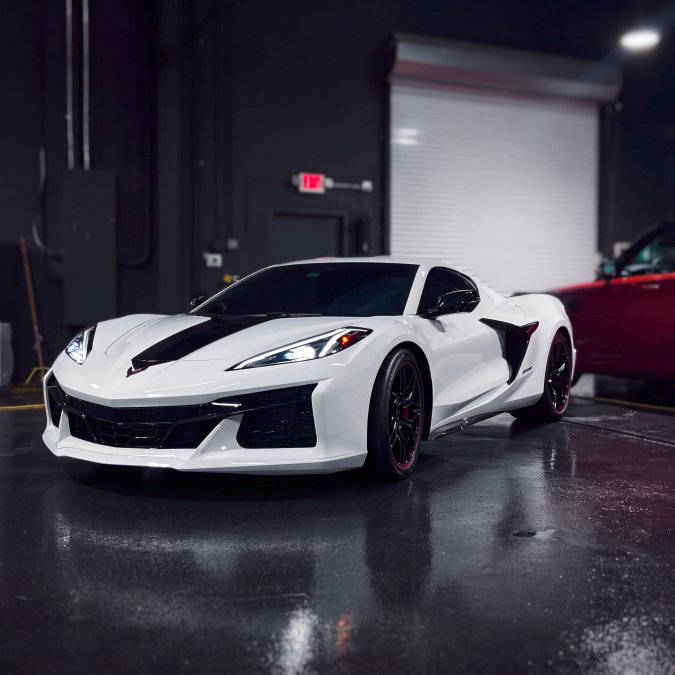
Our principle’s and staff at Automobilia have owned many white and pearl white vehicles over the past 20 years. Some have had full body installation and some just the leading edges like the hood, fenders and bumper. We have NEVER experienced a discernible difference even after 10 plus years of ownership between surfaces coated with PPF and those without whether on a clients vehicle or our own ruling out the possibility our maintenance program is a contributing factor.
Can Yellowing in Paint Protection Film Happen and How
Yellowing in paint protection film can happen through specific mechanisms. Understanding them helps you recognize what to avoid, whether it’s normal aging or a sign of poor quality or installation.
UV Exposure and Sunlight Damage
Ultraviolet rays break down the polymers in film over time. This is chemistry, not a defect. Every plastic degrades under UV exposure eventually.
Modern XPEL film formulations include UV stabilizers that slow this process significantly. Vehicles parked in direct sunlight year-round will show film changes faster than those in covered parking.
The film doesn’t turn yellow like aged plastic wrap. Instead, it develops a subtle amber or hazy tint that reduces optical clarity. On white or pearl white vehicles, this can become visible because the contrast is more discernible.
Adhesive Aging and Installation Quality
The adhesive layer beneath the film can yellow independently of the film itself. Poor installation traps moisture or air bubbles, which accelerates adhesive breakdown. Professional installation matters here. Proper technique removes air and moisture.
Cheap adhesives yellow faster than premium formulations. XPEL uses quality adhesives designed for long-term clarity retention. However, even premium adhesive ages over time. This is why warranty coverage matters, manufacturers back their products with specific timelines.
Film Formulation and Generation Differences
XPEL has released multiple film generations. Older XPEL formulations from 15+ years ago, well outside the warranty period, show more visible yellowing than current versions. The company invested in UV stabilizer technology specifically to address this concern.
Newer film formulations retain clarity longer. If you’re comparing film performance, generation matters as much as brand. A 2016 XPEL film behaves differently than a 2026 XPEL film. Comparing them directly is like comparing phones from different decades, the technology evolved.
Maintenance Product Choice
High pH products can break down the protective UV topcoat on all PPF products. That component is an important part of the assembly that stops yellowing. It is important to use pH neutral products when maintaining your vehicle. We recommend you follow the manufacturer’s recommendations. This is especially important when trying to exercise a warranty and could be reason for the denial of a claim should you need to make one.
Why White and Light-Colored Vehicles Show Yellowing More Clearly
White and pearl white paint can show film yellowing more dramatically because of contrast. A slight amber tint becomes obvious against pure white. The same yellowing on a black vehicle is nearly invisible because both the paint and film appear dark.
This is visibility, not severity. The film on both vehicles may degrade at similar rates. White vehicle owners simply notice it sooner.
Colored vehicles (red, blue, gray) fall between white and black in terms of visibility. The tint becomes noticeable but less dramatic than on white paint.
How Long Does XPEL Paint Protection Film Last
Longevity questions get vague answers because film lifespan is not a single number. It is a range shaped by four variables: UV exposure intensity, vehicle color, film generation, and installation quality. A transparent comparison is more useful than a blanket claim.
Longevity by Exposure Environment
|
Environment |
Typical Clarity Retention |
Notes |
|---|---|---|
|
Covered garage, moderate climate |
10+ years |
Lowest sustained UV load |
|
Daily driver, mixed parking |
7-10 years |
Most common real-world case |
|
Year-round direct sun, high-UV region |
5-8 years |
Accelerated polymer breakdown |
|
Desert or industrial exposure |
4-7 years |
UV plus airborne contaminants |
These ranges assume professional installation and reasonable care. They are patterns observed across installations, not guarantees. A vehicle parked outdoors in a high-UV region will always reach visible change sooner than the same vehicle kept in covered parking.
Longevity by Vehicle Color
Color does not change how fast the film degrades, it changes how soon you notice. On white and pearl white paint, a subtle amber shift becomes visible within a few years. On black or dark paint, the same film may look unchanged for a decade because the tint has nothing to contrast against.
This is why two owners with identical film, installed the same year, can report completely different experiences. One sees yellowing at year six; the other sees nothing at year twelve. The film aged similarly. The visibility did not.
Longevity by Film Generation
XPEL has released multiple film generations over the past few decades. Films from roughly fifteen or more years ago show visible yellowing sooner than current formulations, because UV stabilizer chemistry improved substantially between generations.
If you are evaluating a used vehicle with film already installed, ask for the installation date. A film installed in the last few years is likely a newer generation with better clarity retention than one installed a decade ago, even if both carry the same brand name.
Longevity by Installation Quality
Installation affects lifespan as much as the film itself. Trapped moisture, air bubbles, or stretched film at seams create stress points that age faster than the surrounding material. A film installed with proper squeegee technique and clean edges will typically outlast a rushed installation by several years, even using identical product.
What the Timeline Actually Looks Like (example: Daily Driver)
- Years 0-5: Most owners notice no change. Film looks new.
- Years 5-8: Subtle haziness or amber tint may appear on light-colored vehicles. Darker vehicles often show nothing.
- Years 8-12: Clarity loss becomes noticeable on light paint. Film still protects the paint underneath.
- Years 10-15: Optical clarity has declined meaningfully. Protection may still be intact, but appearance has changed.
The film does not fail suddenly. It degrades gradually, and the paint underneath remains protected throughout. The decision to replace is usually about appearance, not protection failure.
Signs Paint Protection Film Needs Replacement
Watch for these indicators that your XPEL film is aging or failing:
- Visible yellowing or amber tint, especially noticeable on white or pearl vehicles
- Cloudy or hazy appearance that doesn’t clean off with washing
- Loss of gloss where the film once appeared glossy and reflective
- Peeling or lifting edges, typically at panel seams or corners
- Bubbling or delamination where the film separates from the paint
- Cracks or stress marks from impacts or stress
- Discoloration around edges where adhesive has darkened
Ec61964E Be38 4A00 Aeef C88Bfb511D31
These signs don’t mean the film failed. They mean it’s aging. The paint underneath remains protected. But if the film’s appearance bothers you or clarity has degraded significantly, replacement is the solution.
XPEL Paint Protection Film Warranty Coverage
Warranty is where most articles stop at a bullet list. The practical question is not whether coverage exists, it is what qualifies, what does not, and how to actually file a claim. Here is the detail that matters.
What Is Typically Covered
- Clarity retention for a defined period (commonly 5-7 years, depending on the specific film product)
- Adhesive failure such as delamination or bubbling traced to manufacturing defects
- Yellowing caused by manufacturing defects, not environmental aging
- Cracking or peeling resulting from age or the breakdown of UV protection most likely from the wrong maintenance products.
Coverage terms vary by film product line. The specific warranty period for your film is stated on the warranty documentation provided at installation.
What Is Typically Not Covered
- Normal aging or UV-induced discoloration after the coverage period ends
- Damage from accidents, road impacts, or improper washing
- Yellowing attributed to extreme environmental exposure such as desert climates or industrial areas
- Damage from chemical exposure, contamination, or neglect
This distinction, manufacturing defect versus environmental aging, is the single most common reason claims are denied. A film that yellowed because of a formulation defect is covered. A film that yellowed because it spent eight years in direct desert sun is generally not.
Documentation You Will Need
Warranty claims require proof. Before you need it, keep:
- Proof of installation date, typically an invoice or installation record from the shop
- Film product identification, the specific XPEL product line installed
- Photographs of the affected area, taken in consistent lighting
- Vehicle identification matching the installation record
Consumer Product Safety Commission guidance on product warranties recommends retaining installation documentation and photos for any warranty claim. This is straightforward to do at the time of installation and difficult to reconstruct later.
How to Start a Claim
- Contact your installer first. In most cases, the shop that installed the film initiates the warranty process on your behalf. This is the fastest path.
- Provide documentation. Installation date, product line, and photos of the affected area.
- Allow inspection. The installer or a manufacturer representative may need to inspect the film in person to confirm the defect is manufacturing-related.
- Wait for determination. The manufacturer decides whether the issue qualifies under the warranty terms.
If your original installer is no longer in business, contact XPEL directly with your documentation. The process is slower without installer involvement but not impossible.
Why Installer Involvement Matters
A shop that installs film regularly has an established relationship with the manufacturer and knows the claim process. At Automobilia Auto Salon, we manage warranty claims for all our installations, which means you are not navigating the process alone if an issue arises. This is one practical reason to choose an installer who will still be around in five years.
Maintenance and Care to Preserve Film Clarity
Proper maintenance extends film life and preserves clarity.
Washing and Cleaning
- Wait 48 hours after installation before washing
- Use pH-neutral car wash soap (avoid harsh chemicals)
- Wash by hand or use touchless car washes
- Avoid abrasive brushes or automatic car washes with bristles
Protective Measures
- Park in covered parking when possible
- Apply ceramic coating over film for added protection and gloss
- Avoid harsh chemicals, solvents, or acidic cleaners
Inspection
- Check film edges and seams regularly for lifting or peeling
- Monitor clarity, compare your film to new installations to spot changes
- Address small issues (edge peeling) before they spread
What to Avoid
- Pressure washers on film seams
- Wax or sealants not designed for film (they can degrade adhesive)
- Abrasive compounds or polishing pads
- Parking under trees with heavy sap or bird droppings
International Organization for Standardization standards on protective film durability establishes testing protocols for film longevity.
Ceramic coating applied over film adds another layer of protection. It shields the film from UV rays, contamination, and oxidation.
All brands of PPF film yellowing concerns are legitimate, but they’re manageable with quality installation and proper care. Modern formulations resist yellowing far better than older films.
At Automobilia Auto Salon, we’ve been protecting vehicles for over 24 years. We use genuine XPEL film, install it correctly, and stand behind our work with full warranty coverage.
Frequently Asked Questions
What if I suspect my XPEL paint protection film is turning yellow?
Regular cleaning and maintenance help distinguish surface contamination from actual film degradation. If you’re uncertain whether your film has degraded, a professional inspection at Automobilia Auto Salon can confirm the cause and recommend maintenance or replacement.
How long does XPEL paint protection film last before it yellows?
Quality XPEL film typically maintains clarity for 7-10 years with proper maintenance, though lifespan varies based on climate, sunlight exposure, and installation quality. Newer XPEL formulations offer improved UV resistance compared to older films. Your XPEL warranty coverage specifies expected performance timelines—check your documentation for exact terms specific to your installation.
What does XPEL’s warranty cover if my film yellows?
XPEL paint protection film warranties typically cover manufacturing defects and discoloration caused by film formulation failure, not damage from improper installation or extreme environmental neglect. Warranty eligibility depends on professional installation and proper maintenance. Coverage duration and specific terms vary by product line and purchase date. Contact Automobilia Auto Salon for a free quote and detailed warranty information for your vehicle—we can review your specific coverage and discuss replacement options if needed.
Can I tell if yellowing is on the film surface or inside the film itself?
Surface contamination appears as a haze or spots that may diminish with thorough cleaning. True film yellowing appears uniform across the film thickness and won’t wash away. Inspect film edges and seams closely—contamination concentrates there, while genuine yellowing affects the entire film area consistently. If you’re uncertain whether your film has degraded, a professional inspection at Automobilia Auto Salon can confirm the cause and recommend maintenance or replacement.