
Table of Contents
- How Long Paint Protection Film Lasts: The Short Answer
- PPF Durability Factors: What Actually Decides the Lifespan
- Paint Protection Film Maintenance: A Simple Schedule That Works
- Signs Paint Protection Film Needs Replacement
- What a Paint Protection Film Warranty Covers (And What It Doesn’t)
- Replacement, Removal, and Paint Risk: What to Know Before You Re-Wrap
- Conclusion: Making PPF Last Its Full Lifespan
- Frequently Asked Questions
Last Updated: October 7, 2026
How Long Paint Protection Film Lasts: The Short Answer
Most quality paint protection film lasts between 5 and 10 years. Premium films installed by a professional can stretch toward 12 years or more with careful maintenance. At Automobilia Auto Salon, we’ve protected vehicle paint for 26 years, and the pattern is always the same: film quality, installation, and care decide the lifespan.
So if you’re asking how long does paint protection film last, the honest answer is “it depends.” A cheap film slapped on in a dusty garage might start peeling in two years. A top-tier film applied in a clean bay and washed correctly can outlast your loan.
Below, we break down exactly what shortens or extends that window. You’ll also get a maintenance schedule, inspection tips, and the warranty details most shops never explain.
PPF Durability Factors: What Actually Decides the Lifespan
Four things decide how long your film survives: the film itself, the installer, the climate, and how you drive. Get all four right and you’re in the 10-year club. Get one wrong and the clock runs fast.
Film Construction: TPU, Adhesive, and Top Coat
The film’s build matters more than anything else. Modern premium film uses a thermoplastic polyurethane (TPU) base layer. TPU resists cracking and holds its shape through temperature swings.
On top sits a clear coat that gives the film its self-healing and hydrophobic properties. Cheaper films skip the good top coat. That’s why they haze, stain, and lose clarity early.
The adhesive layer is the quiet hero. A weak adhesive means lifting edges and trapped moisture. A quality adhesive keeps the film sealed for years.
Installation Quality and Coverage Area
A great film in bad hands still fails. Dust, stretch marks, and lifted edges all trace back to installation.
- Clean room matters: Dust under the film creates visible bumps that never go away.
- Edge wrapping: Wrapped edges resist peeling far better than cut edges.
- Coverage: Full-front or full-body coverage protects more paint, but seams and complex curves need real skill.
This is the part most guides skip. Installation isn’t a footnote. It’s half the lifespan.
Climate, Sun Exposure, and Vehicle Use
Where you park and how you drive change everything. Constant UV exposure breaks down any film over time. Garage-kept cars in mild climates see the longest life.
Vehicle use counts too. Daily highway driving means more road debris and stone chips hitting the film. Track days and harsh weather add wear and tear. A weekend car stored indoors will always outlast a daily commuter parked outside.
Paint Protection Film Maintenance: A Simple Schedule That Works
Good paint protection film maintenance is simple, but it isn’t optional. Skip it and you’ll cut years off the film’s life. Follow a routine and the film keeps its clarity and self-healing ability.
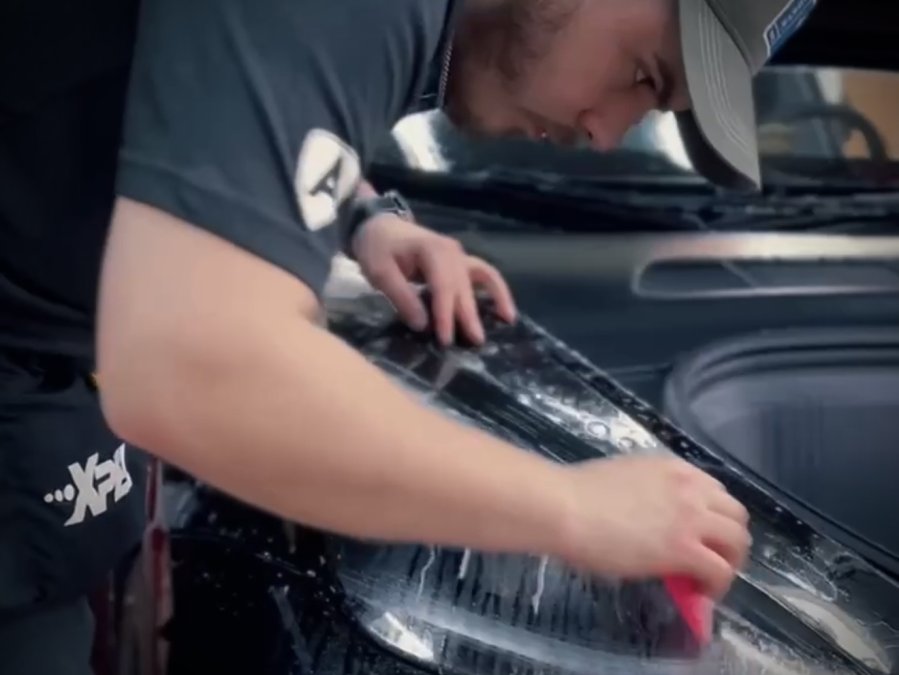
Here’s the schedule we give our own clients:
| Task | Frequency | Why It Matters |
|---|---|---|
| Hand wash with pH-neutral soap | Every 2 weeks | Removes dirt before it bonds to the film |
| Spot-clean bird droppings and bugs | Same day | Acids etch the top coat fast |
| Inspect edges and seams | Monthly | Catches lifting before it spreads |
| Apply a film-safe sealant or | Every 3-6 months | Restores hydrophobic properties |
| Apply a ceramic coating | Every 4 – 8 Years | Provides Long Lasting Hydrophobic Properties and Chemical Inertness |
| Professional inspection | Annually | Catches problems you’d miss |
Washing Do’s and Don’ts
- Do use the two-bucket method and soft microfiber.
- Do rinse off road salt and bug residue quickly.
- Don’t take it through a brush car wash. Ever.
- Don’t use abrasive polishes or harsh degreasers on the film.
- Don’t let a pressure washer get close to the edges.
Signs Paint Protection Film Needs Replacement
Film tells you when it’s done. Watch for these signs paint protection film needs replacement:
- Peeling or lifting edges that won’t stay down
- Cracking or crazing across the surface
- A cloudy or hazy look that won’t wash off
- Staining that soaks into the film, not just the surface
- Lost self-healing (light scratches stop disappearing)
- Bubbles or trapped moisture under the film
One small lifted edge can often be repaired. Widespread cracking or haze means it’s time to replace. Catch it early and you protect the paint underneath.
What a Paint Protection Film Warranty Covers (And What It Doesn’t)
A paint protection film warranty covers defects in the film itself, not damage you cause. The film is intended to take the brunt of the force of road debris. It cannot protect you against every scenario, but it does protect the majority. Sharp objects traveling at high speeds can penetrate the surface of the film. The material has been tested to resist 1/4” pebbles at 125 miles per hour with no evidence of damage or degradation of the film.
Most premium warranties run 5 to 10 years. But the number on the box is a ceiling, not a promise. Coverage is typically limited to manufacturing defects under normal use, and it usually requires that an approved or certified installer applied the film. Buy a roll online and have a mobile installer apply it, and you may have no warranty at all.
What’s Typically Covered
- Delamination, the film separating from its adhesive or top coat
- Cracking or crazing under normal exposure
- Defects in clarity that appear without outside cause
- Adhesive failure not caused by improper installation
What’s Typically Excluded
- Rock chips, impact damage, and road debris
- Damage from brush car washes, harsh chemicals, or abrasive polishes
- Peeling caused by bad installation, especially from a non-certified shop
- Film applied over pre-existing paint damage, repaints, or bodywork
- Damage from accidents, vandalism, or improper removal
How Warranty Claims Actually Work
A common pattern is that the warranty covers the film, not the labor. That means if a panel fails and the maker approves a replacement, you may still pay for removal and reinstallation. Ask two questions before you buy:
- Is labor covered, or just the film? Many warranties replace material only.
- What proof of care is required? Some makers want wash records or proof that no brush car washes were used.
At Automobilia, we have you covered. We offer hand car wash services using proper chemicals. We also use XPEL films which has a 10 year warranty that covers film and labor giving you peace of mind. In most cases, we don’t make you wait for a warranty decision either. Given our experience we will call it on the spot.
Other manufacturer coverage also often prorates. A film warranted for 10 years might be fully covered in year one and only partially covered by year eight, so a failure late in the term may leave you paying most of the cost anyway.
Ask for the written terms before you buy, and confirm whether your installer is certified by the film manufacturer. That single detail decides whether your warranty is worth anything.
Replacement, Removal, and Paint Risk: What to Know Before You Re-Wrap
Replacing film is routine. Removing it is where things go wrong. Old adhesive can bond tightly to the clear coat, and pulling cold film can lift paint with it. The decision isn’t just “replace or not”, it’s whether to replace one panel or the whole installation, and whether removal is safe on your paint.
Partial vs. Full Replacement: How to Decide
Partial replacement makes sense when:
- One panel failed (a rock strike tore the hood film, or a mirror cap peeled)
- The rest of the film is still clear, adhered, and within its lifespan
- You can match the new film to the old in finish and age
Full replacement makes sense when:
- Multiple panels are failing at once
- The film is near or past its expected lifespan
- Clarity has dropped across the whole car, not just one area
- You’re changing finish (gloss to matte, or vice versa)
A practical rule: if more than about a third of the covered surface is failing, full replacement usually costs less in the long run than chasing panel-by-panel repairs. Mismatched film ages differently, so a new panel next to five-year-old film can look noticeably different within a year.
Removal Risk: What Raises It
Removal is safest on film that’s still within its lifespan and on factory paint. Risk climbs when:
- The film is old. Adhesive cures harder over time and grips the clear coat more aggressively.
- The panel was repainted. Bodywork and aftermarket paint bond less predictably, and film can pull it on removal.
- The film was installed over existing damage. Chips and scratches under the film give the adhesive more to grab.
- The film was applied poorly. Stretched or over-trimmed film can tear during removal and leave adhesive behind.
- The installer rushed the prep. If the paint surface was not prepped for future removal by using some type of mold release, the adhesive can bod aggressively to the paint increasing the possibility of paint failure.
How Safe Removal Works
A pro uses controlled heat, typically a heat gun or steamer, to soften the adhesive, then peels at a slow, consistent angle. Cold film pulled fast is what lifts paint. Adhesive residue is then removed with a dedicated solvent, not scraped off.
After Removal
Once film comes off, the paint underneath is usually in better shape than the exposed panels, that’s the point of the film.
Conclusion: Making PPF Last Its Full Lifespan
Getting the most from your film comes down to three choices: buy quality, hire a professional installer (experience matters), and keep up with care. Do those and you’ll get every year the film has to offer.
At Automobilia Auto Salon, we’ve protected vehicle paint for 26 years using high-quality XPEL film, ceramic coatings, and white-glove service. We offer 2025 Tesla courtesy cars so you can have the freedom your vehicle provides you even while it’s with us. Get a free quote and protect your vehicle’s paint the right way.
Frequently Asked Questions
How long does paint protection film typically last on a car?
Most quality paint protection film lasts 5 to 10 years, and premium films can reach up to 12 years or more when installed correctly and cared for properly. The film’s lifespan depends on material quality, installation standards, sun exposure, and how well you maintain it. Films on garaged vehicles in mild climates tend to last longer than those on daily-driven cars parked outdoors.
What factors affect how long paint protection film lasts?
Key PPF durability factors include film construction (TPU with a quality top coat lasts longest), professional installation, climate and UV exposure, road debris, and maintenance habits. Vehicles stored indoors and washed regularly with pH-neutral products get closer to the upper end of the 10 year range. Harsh sun, abrasive car washes, and neglected edges shorten film lifespan significantly.
How can you tell when paint protection film needs to be replaced?
Watch for lifting or peeling edges, visible scratches that no longer self-heal, a cloudy tint, cracking, and trapped dirt along the film’s borders. Discoloration and clarity loss are among the clearest signs paint protection film needs replacement. Inspect your film every six months, ideally during a wash, so small issues are caught before they affect the paint underneath.
Does a paint protection film warranty guarantee it won’t fail?
No. A paint protection film warranty typically covers manufacturing defects like cracking or delamination, but it usually excludes damage from accidents, improper washing, abrasive products, or neglect. Warranty periods vary by manufacturer and installer, so read the terms before installation. Regular maintenance and documented care help you stay eligible if a claim is needed.