
Table of Contents
- The Real Downside to PPF: An Honest Overview
- Paint Protection Film Installation Cost and What You’re Really Paying For
- Professional vs DIY PPF Installation: Why the Gap Matters
- PPF Maintenance Requirements Most Owners Underestimate
- Removal Risks, Edge Lifting, and the Damage Nobody Warns You About
- Warranty Coverage, Insurance, and Climate-Specific Failure
- PPF vs Ceramic Coating: Which Downside Can You Live With?
- Frequently Asked Questions
Last Updated: September 28, 2026
The Real Downside to PPF: An Honest Overview
What is the downside to PPF? The biggest one is cost. A quality installation represents an investment in a sacrificial layer, not a permanent one. Think of your car like your iPhone and PPF like the case you apply to protect it. Film has a service life which is typically 10 years. It needs care, and today’s extreme demands on the hidden install pushing coverage to places where it should have stopped short, it can fail at the edges. At Automobilia Auto Salon, we’ve installed film for 26 years, and we’d rather you understood those trade-offs before you book than after.
Paint protection film is a thermoplastic urethane sheet, typically 8 mils to 10 mils thick, applied to painted panels to absorb rock chips, road debris, and bug splatter before they reach your clear coat. The film takes the damage so the paint doesn’t.
That’s the honest pitch. What most articles skip is the second half: what you’re signing up for when you say yes.
Below, we break down the seven hidden risks, from removal damage to warranty gaps, so you can decide with clear eyes.
Paint Protection Film Installation Cost and What You’re Really Paying For
Paint protection film installation cost is where the first downside lands, and it’s the one people feel immediately. A quality installation is priced by coverage area, film brand, and labor hours.
What you’re actually paying for breaks into three buckets:
- Film material, the urethane sheet itself, plus the adhesive system
- Installation labor, often the largest line, because a clean install takes a skilled hand and hours of work
- Prep work, paint correction and surface preparation before a single panel is covered
That third item is the one buyers underestimate. Film traps whatever is under it. If there’s contamination, a scratch, or swirl marks on the panel, the film locks them in place for years.
Pricing depends on coverage and vehicle, so we quote each job rather than publish a number. Get a Free Quote from Automobilia Auto Salon for your specific vehicle.
Professional vs DIY PPF Installation: Why the Gap Matters
Professional vs DIY PPF installation comes down to one thing: installation precision. Film is unforgiving. A trapped speck of dust, a stretched corner, or a wet edge that doesn’t seal becomes a permanent defect.
DIY kits exist, and for a small flat panel, a patient owner can sometimes manage a passable result. Anything with a curve, a crease, or a compound angle is a different problem.
Here’s what separates the two:
| Factor | DIY | Professional |
|---|---|---|
| Surface prep | Often skipped | Paint preparation included |
| Dust control | Open garage | Controlled environment |
| Edge sealing | Rarely wrapped | Wrapped and tucked |
| Defect rate | High on curves | Low, backed by redo policy |
| Recourse if it fails | None | Warranty coverage |
A common mistake is buying film online and treating the install as a weekend project. The film is the cheap part. The skill is what you’re paying for.
PPF Maintenance Requirements Most Owners Underestimate
PPF maintenance requirements are lighter than bare paint, but they are not zero. Film is a wear item. It wants washing, and it wants the right products.
A simple maintenance routine:
- Hand wash with a pH-neutral soap every two to three weeks
- Skip automatic brush washes, which scuff the film surface
- Remove bird droppings and bug splatter promptly, before they etch
- Apply a ceramic coating or sealant over the film to keep it slick and hydrophobic
The self-healing properties that make film appealing need heat to work. A warm day or a heat gun lets minor swirls level out. Deep scratches won’t.
Removal Risks, Edge Lifting, and the Damage Nobody Warns You About
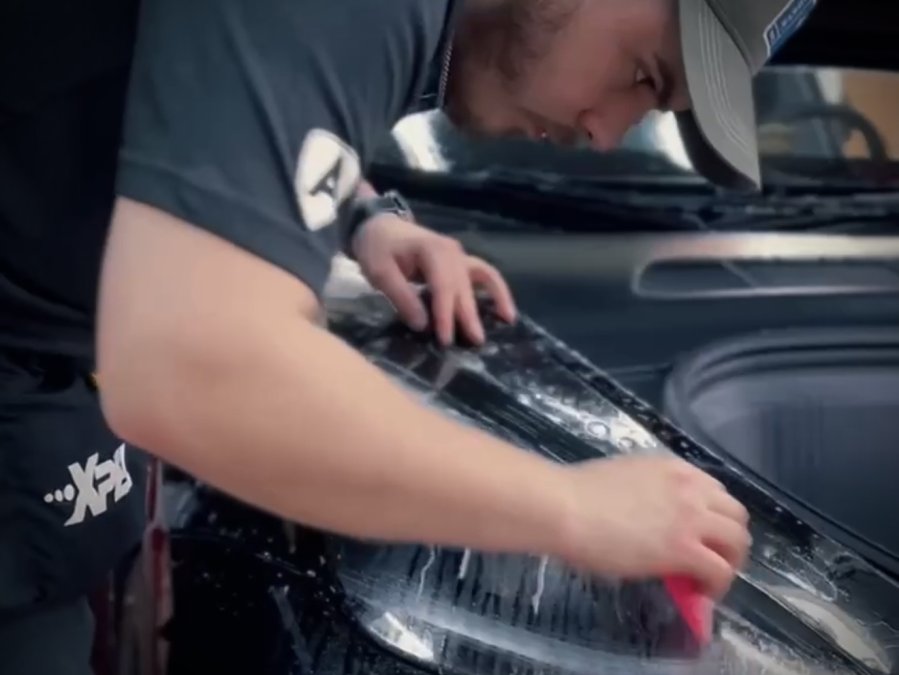
Removal is the downside nobody talks about at the point of sale, and it is the one most likely to cost you real money. Film does not come off like a sticker. It is bonded to your clear coat by a pressure-sensitive acrylic adhesive, and how that bond releases depends on the film’s age, the adhesive formulation, and how the panel was prepped before installation.
Here is the mechanism most articles skip. The adhesive is designed to hold through years of thermal cycling.
A few practical realities:
- Film Aged within Warranty Period (under 7-10 years) usually peels in large, clean sheets with moderate heat and steady, low-angle tension.
- Aged film often comes off in fragments, leaving adhesive residue that needs a solvent-based remover and patience. Fragmented removal means more passes with the heat gun, which means more cumulative heat exposure to the paint.
- Repainted or poorly prepped panels are the highest-risk case. If the repaint’s adhesion is marginal, the film’s bond can exceed it, and removal lifts paint instead of adhesive.
- Cold removal is the classic DIY mistake. Pulling film at low ambient temperature makes the adhesive brittle and the film tear-prone, which forces the operator to pull harder and faster, exactly the conditions that take clear coat with the film.
Edge lifting is the earlier warning sign, and it has its own mechanism. Film edges are the only part of the installation exposed to the environment at a cut line. Over time, wax residue, road dust, and wash mitt fibers collect along that line. The visible result is a dark “dirt line” tracing every panel edge, which is one of the most common long-term aesthetic complaints. At Automobilia Auto Salon, we have techniques to clean this line safely but it will require another visit for service.
Warranty Coverage, Insurance, and Climate-Specific Failure
Warranty coverage on PPF is narrower than most buyers assume, and the gap between what owners think is covered and what actually is covered is where most disputes start. Manufacturer warranties on premium film brands generally run several years and cover film defects: bubbling, cracking, adhesive failure, and delamination under normal conditions. What they almost never cover is installation error, impact damage, neglect, or improper maintenance.
- High-UV climates break down the film’s topcoat and urethane substrate over years. The film does not fail suddenly; it loses gloss, then clarity, then structural integrity, and it becomes harder to remove cleanly because the substrate weakens before the adhesive does.
- Cold-winter climates stress film through freeze-thaw cycling. Film installed around dramatic features in a stressed condition can experience adhesive failure leaving behind lifted edges and potential air pockets.
- Coastal and high-humidity climates drive adhesive failure and edge lift faster than dry climates, because moisture is the primary enemy of a pressure-sensitive adhesive bond.
| Failure Type | Usually Covered | Usually Not Covered |
|---|---|---|
| Bubbling from manufacturing defect | Yes | |
| Impact damage (rock chip through film) | Yes | |
| Installation error (trapped dust, lifted edge) | Yes | |
| Edge lift from neglect or lack of maintenance | Yes | |
| Adhesive failure under normal conditions | Yes | |
| Removal labor and paint repair after removal | Yes |
PPF vs Ceramic Coating: Which Downside Can You Live With?
PPF vs ceramic coating isn’t a fair fight, because they do different jobs. Ceramic coating is a chemical layer that adds gloss, makes washing easier, and resists chemical etching. It does not stop a rock.
Pick based on what you’re protecting against:
- Rock chips and road debris → PPF
- Gloss, easy washing, chemical resistance → ceramic coating
- Maximum protection → PPF with a ceramic coating on top
Frequently Asked Questions
Can I go through a carwash with PPF?
Touchless carwashes are generally safer for paint protection film than brush-style washes, which can catch film edges and cause lifting. Hand washing with pH-neutral soap and a microfiber mitt remains the safest option. Avoid high-pressure spray aimed directly at seams or edges, since forced water can work under the film and trigger adhesive failure.
What happens to PPF after 10 years?
Most quality paint protection film carries a warranty of five to ten years, but real-world longevity depends on climate, sun exposure, and maintenance. After a decade, film may show UV degradation, gloss loss, or edge lifting. Removal after that stage carries more risk because the adhesive bonds harder to the clear coat, which is why professional removal is recommended.
How much does PPF usually cost?
There is no simple answer. Headlight coverage starts around $99 where full vehicle coverage can rise over $6,000. Pricing depends on vehicle size, coverage area, and film grade. Installations requiring more material and labor will reflect that in the pricing. For an accurate figure on your specific vehicle, request a quote from a shop that specializes in paint protection film installation.
Does paint protection film affect the resale value of a car?
Almost always. PPF does not show wear like paint. It remains in tact, shiny and damage free due to its impact absorbing nature. Vehicles not only command more resale value, but sell faster and require less aesthetic preparation for sale. Buyers pay more for clean original paint and the comfort knowing someone was a good enough caretaker of the vehicle they want to purchase they applied the film. The benefit shrinks if the film is peeling, bubbling, or trapping debris along lifted edges. Documented professional installation and a transferable warranty coverage help preserve that value at trade-in.
The real challenge with PPF isn’t deciding whether it works. It’s finding an installer who preps the paint properly, seals the edges, and stands behind the work when something goes wrong. Automobilia Auto Salon has protected vehicles for 24 years, offering XPEL paint protection film, ceramic coatings, and window tinting, plus amenities like 2025 Tesla courtesy cars so your car isn’t sitting in a shop for days. Get a free quote and protect your vehicle’s paint with an installation built to last.